Exploring human iPSC-derived cardic organoids for cardiovascular disease treatment

Overview
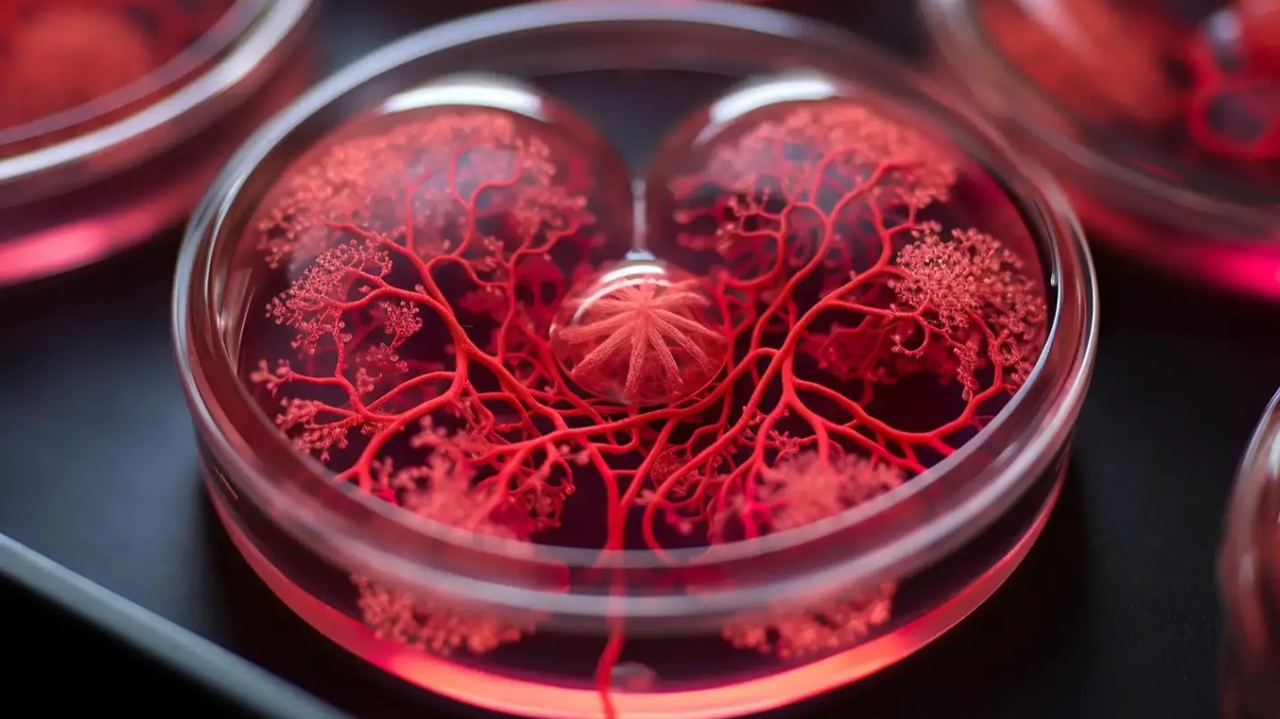
The Centre for Regenerative Medicine and Health (CRMH) has constructed stable, chamber-like cardiac organoids and epicardial organoids from human pluripotent stem cells. Demonstrating functional maintenance for 180 days, this long-term viability provides a novel platform for exploring therapeutic interventions for cardiovascular disease in an authentic human physiological environment.
Problem addressed
Cardiovascular disease remains the leading cause of global mortality, driven largely by the irreversible loss of functional cardiomyocytes. However, understanding how these disorders originate and how to treat them is limited by our ability to accurately model the human heart in vitro.
Innovation
- This work established a robust, reproducible platform for generating structurally stable, compositionally defined human cardiac organoids that recapitulate key cardiac lineages.
- The ability to maintain beating cardiac organoids for six months.
- Instead of directly replacing necrotic myocardium, it uses "cardiac cell" to promote angiogenesis and improve the myocardial microenvironment, mobilizing the patient's own repair capabilities.
Key impact
- The construction of stable cardiac organoids and epicardial organoids from human pluripotent stem cells may offer certain improvements and therapeutic effects for cardiovascular disease.Developing a new therapeutic approach.
- The ability to maintain beating cardiac organoids for six months opens new avenues for investigating chronic cardiac pathologies and long-term pharmacological effects in a physiologically relevant human context.
- Direct replacement can be transformed into mobilizing self-repair mechanisms, thereby mitigating arrhythmia risks, improving myocardial microenvironments, and reducing clinical translation challenges. This approach renders treatment safer, more durable, and more feasible.
Application
- Tissue-engineered cardiac organoid regenerative therapy
- Establishing In Vitro Disease Models Using Cardiac Organoids to Investigate Pathology
- Using cardiac organoids to assess pharmacological effects in a physiologically relevant human context
- By integrating high-throughput data from organoids with AI and biophysical modeling, we have constructed a virtual heart digital twin capable of simulating real physiological conditions.
As the branch organization of the Chinese Academy of Sciences, Hong Kong Institute of Science & Innovation (HKISI) is the first national research institution in Hong Kong SAR approved by the central government of China. Centre for Regenerative Medicine and Health (CRMH), the subsidiary of HKISI, is supported by the Guangzhou Institutes of Biomedicine and Health, Chinese Academy of Sciences. CRMH is funded by CAS and the InnoHK program from the Innovation and Technology Commission, Hong Kong SAR government. With its focus on stem cell therapy & genomic editing, developmental biology, and drug discovery, CRMH promotes the globalization of regenerative medicine research and achievements.
Enquiry