Optical Signal Processor for Data Center Interconnects
Overview
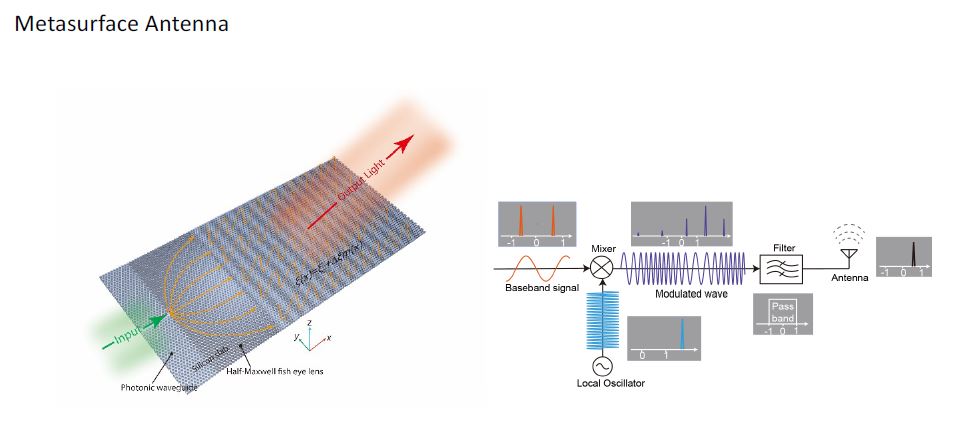
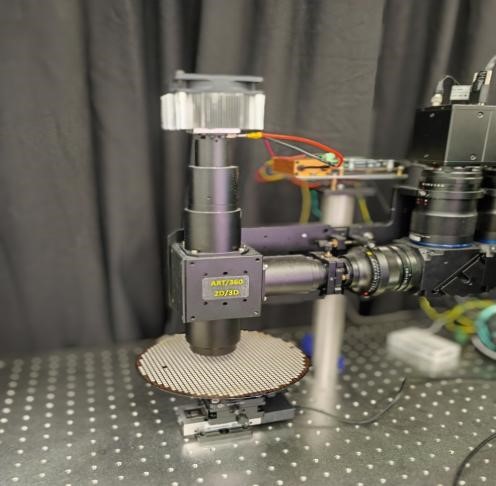
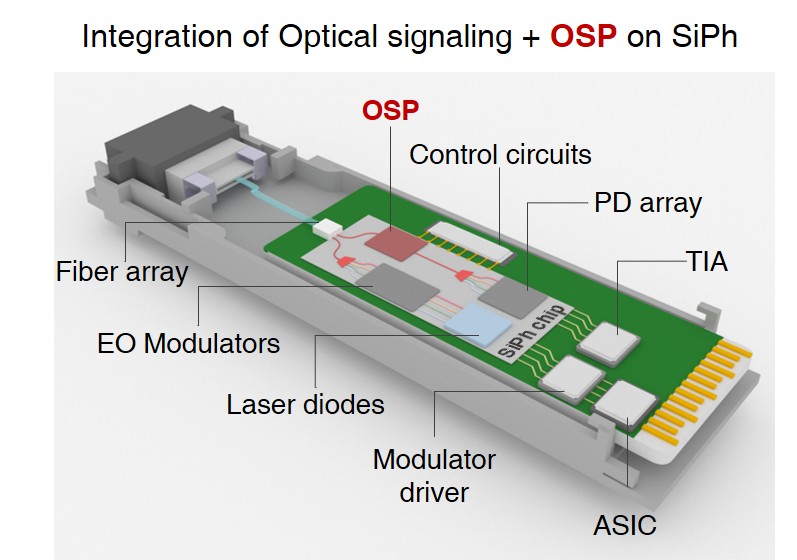
The Chinese University of Hong Kong (CUHK) developed an integrated neuromorphic optical signal processor (OSP), achieving the world’s first fully optical real-time signal processing at 1.6 terabits per second. The OSP features picosecond-level latency, milliwatt-level power consumption, and terahertz-level ultra-large bandwidth, making it an ideal solution for data center interconnects.
Technical name of innovation
Optical Signal Processor for Data C enter Interconnects
Research completion
2025
Commercialisation opportunities
1. Equity Investment2. Technology Licensing
Problem addressed
Training large-scale AI models relies on GPU clusters across multiple data centers, driving demand for low-latency, energy-efficient interconnects. Traditional DSPs are limited by high latency and poor efficiency in high-speed transmission. This invention overcomes these constraints with an integrated optical signal processor for real-time, all-optical signal processing, achieving 6.4 Tb/s throughput, sub-60 ps latency, and femtojoule-per-bit efficiency.
Innovation
- Compared with conventional digital signal processors, the optical signal processor reduces signal processing latency by >10,000 times to just 60 picoseconds, while cutting energy consumption by >1,000 times to only a few femtojoules per bit
- The optical signal processor offers ultra-high bandwidth of tens of terahertz, enabling parallel processing of up to 6.4 Tbit/s information.
- The optical signal processor allows flexible adaptation to various communication link requirements through rapid programmability.
Key impact
- Significantly reduce hardware costs and energy consumption, reduce dependence on foreign-made advanced chips, and support the high-speed interconnect infrastructure needed for next-generation large-scale AI data centers.
- Enable high-speed optical I/O between computing chips and compatible with co-packaged optics (CPO) platforms.
Award
- Second Runner-up and Gold Award at China International College Students' Innovation Competition (2025)
- Gold Medal and Future Technology Excellence Award in WorldInvent Singapore (WoSG) 2025
- Grand Prize in Innovation and First Prize in Information Technology at The 11th Hong Kong University Student Innovation and Entrepreneurship Competition
- Champion at Professor Charles K. Kao Student Creativity Awards 2025
Application
- Intra- and inter-data center interconnects
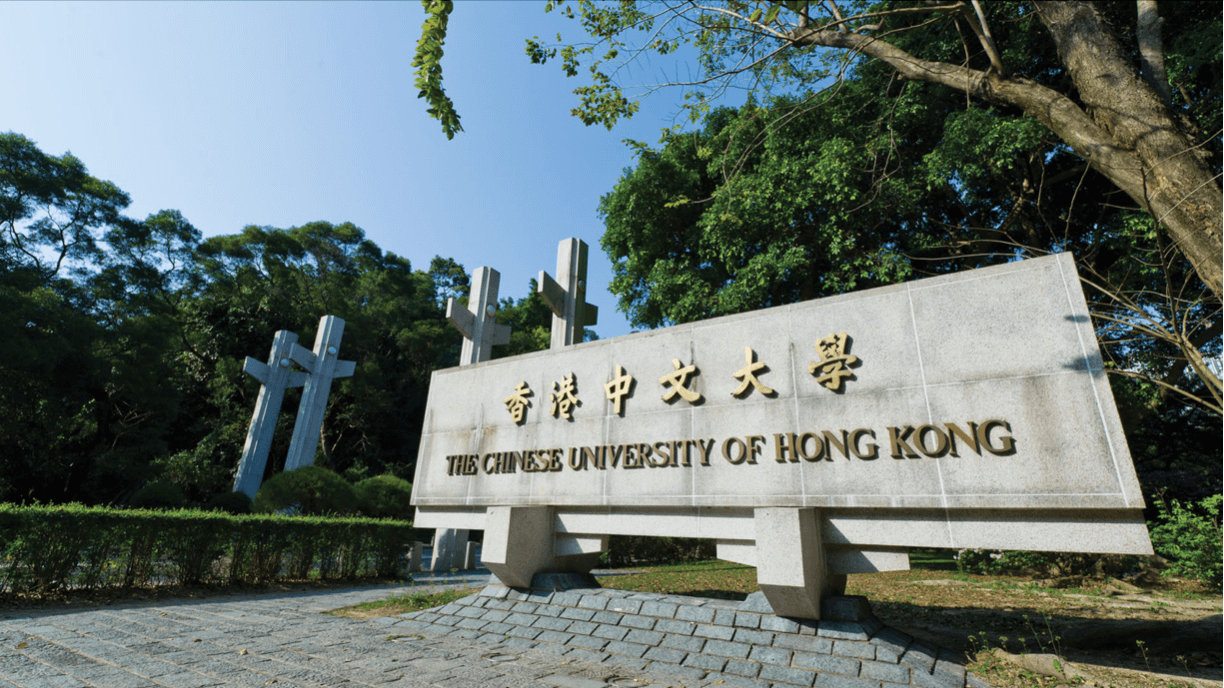
The Chinese University of Hong Kong (CUHK)
Founded in 1963, The Chinese University of Hong Kong (CUHK) is a forward-looking comprehensive research university with a global vision and a mission to combine tradition with modernity, and to bring together China and the West. CUHK teachers and students hail from all around the world. Four Nobel laureates are associated with the university, and it is the only tertiary institution in Hong Kong with recipients of the Nobel Prize, Turing Award, Fields Medal and Veblen Prize sitting as faculty in residence. CUHK graduates are connected worldwide through an extensive alumni network. CUHK undertakes a wide range of research programmes in many subject areas, and strives to provide scope for all academic staff to undertake consultancy and collaborative projects with industry.
Enquiry