Embodied AI-Driven Cooperative Multi-UAV Search and Rescue
Overview
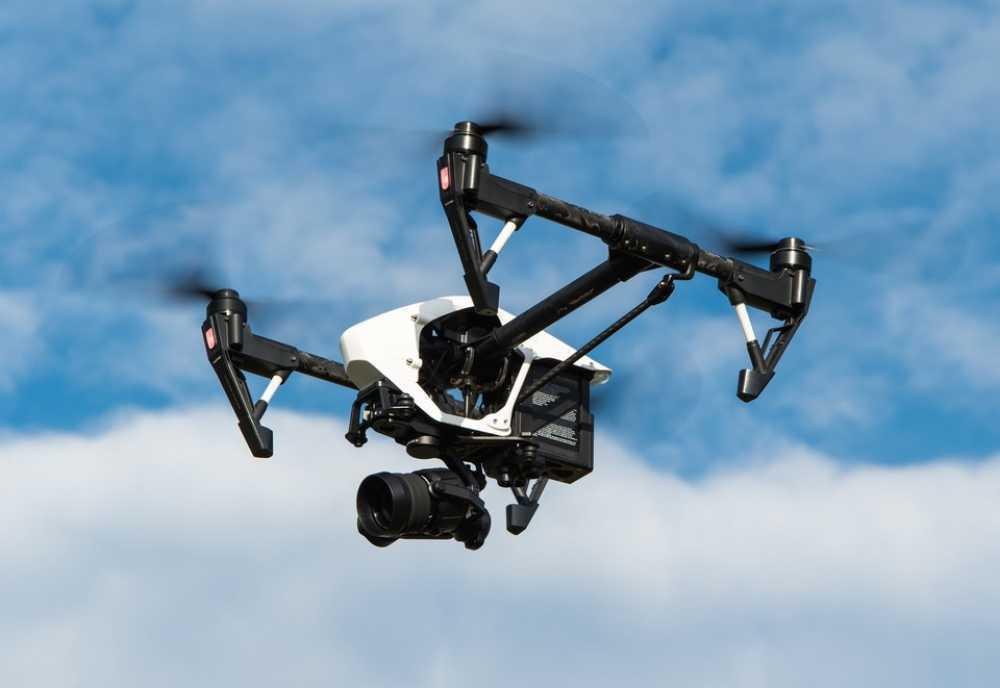
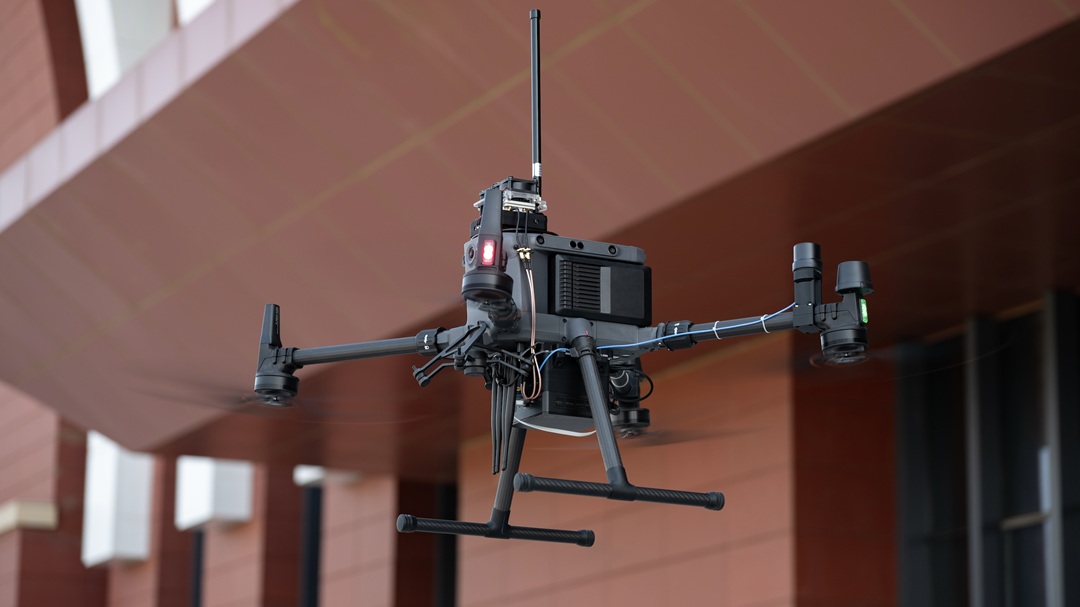
This system supports search and rescue (SAR) operations in vision-blocked environments. It integrates RF sensing and synthetic vision methods for victim detection, signal source seeking, and localization, while leveraging large language model (LLM)–assisted mission planning to enable autonomous multi-UAV search operations.
Problem addressed
Current SAR methodologies struggle with an over-reliance on visual signals and pose significant safety risks to rescue personnel in rugged countryside or confined spaces. This project addresses this critical gap by introducing an autonomous multi-UAV swarm platform engineered for these high-difficulty zones. By synthesizing long-range RF signal tracking with decentralized swarm intelligence, our system offers a vital technological leap, slashing search times and providing a safer alternative to high-risk manual searches.
Innovation
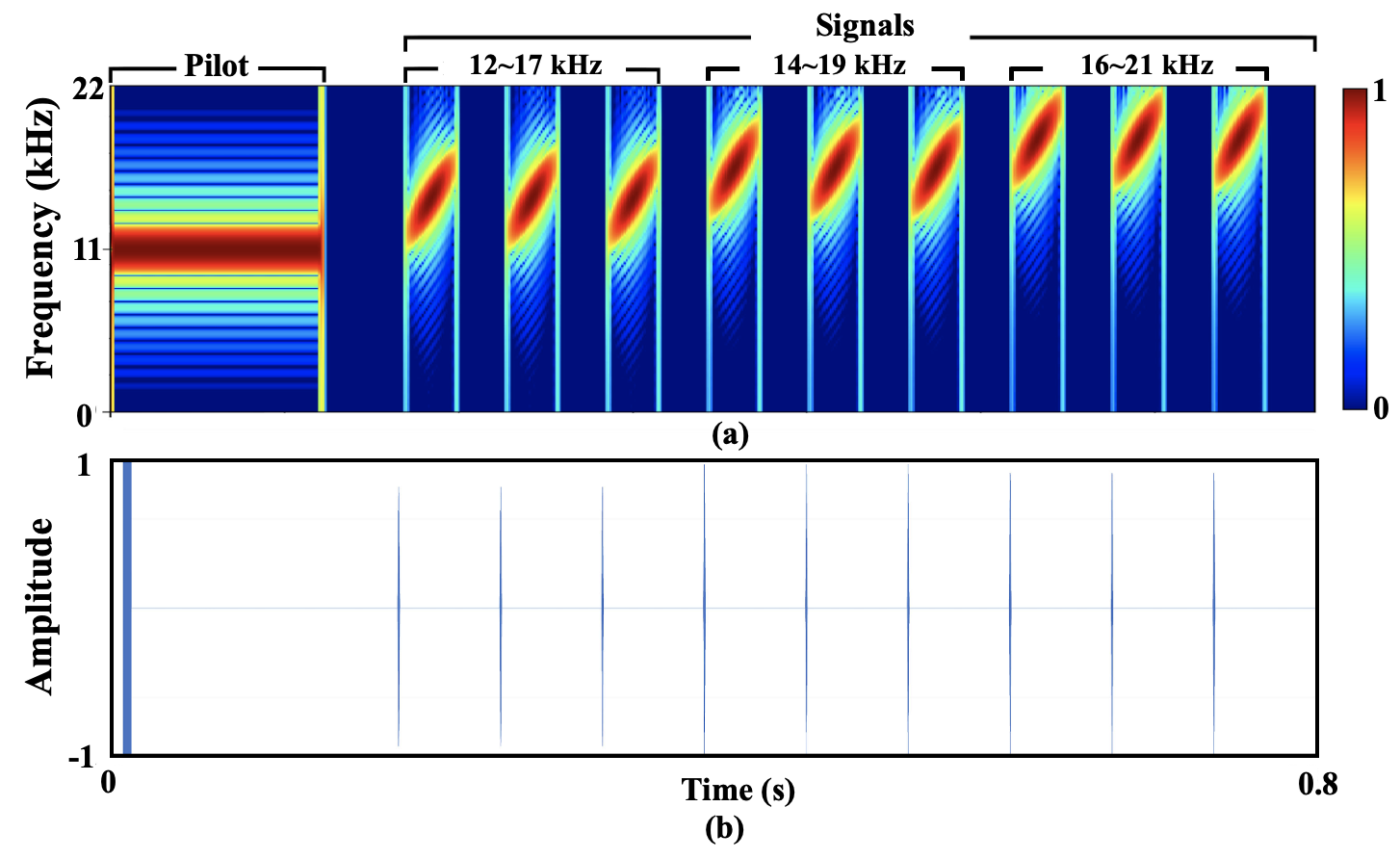
- RF-based multi-protocol victim detection: By integrating LTE/NR, WiFi, and Bluetooth sensing, the system detects nearby mobile phones and uses signal strength or distance-related measurements to guide UAVs toward the signal source, enabling opportunistic victim discovery and localization in environments where visual sensing is obstructed.
- Synthetic-aperture-inspired victim detection: By leveraging synthetic-aperture sensing principles, the system enhances the detection of hidden or partially obscured victims beneath canopy or clutter, improving perception capability in visually blocked environments where direct optical observation is limited.
- LLM-assisted autonomous mission planning: Leveraging large language models, the system enables efficient path planning and adaptive search strategies for multi-UAV operations. Combined with RF sensing and synthetic-aperture detection, UAVs can operate above the canopy while maintaining effective victim discovery and localization in visually obstructed environments.
Key impact
- Improved Victim Discovery in Obstructed Environments
- Faster and More Efficient Search Coverage
Award
- Silver Medal with 5th Asia Exhibition of Innovations and Inventions Hong Kong (AEII)
The Chinese University of Hong Kong (CUHK)
Founded in 1963, The Chinese University of Hong Kong (CUHK) is a forward-looking comprehensive research university with a global vision and a mission to combine tradition with modernity, and to bring together China and the West. CUHK teachers and students hail from all around the world. Four Nobel laureates are associated with the university, and it is the only tertiary institution in Hong Kong with recipients of the Nobel Prize, Turing Award, Fields Medal and Veblen Prize sitting as faculty in residence. CUHK graduates are connected worldwide through an extensive alumni network. CUHK undertakes a wide range of research programmes in many subject areas, and strives to provide scope for all academic staff to undertake consultancy and collaborative projects with industry.
Enquiry